Leak Detection in Long Island City, Queens
Identify the hidden sources of water damage and ceiling stains in multi-family apartments and residential properties without unnecessary demolition.
Call (315) 202-8009Recognizing Leak Warning Signs
Water always follows the path of least resistance, meaning the spot where you see a drip or a stain is rarely the exact location of the broken pipe. Warning signs that demand immediate apartment leak detection Long Island City Queens include expanding yellow or brown stains on your ceiling, bubbling paint or peeling wallpaper, warped hardwood floors, and unexplained spikes in your monthly water bill. In some cases, a musty odor or the subtle sound of running water behind a wall when no fixtures are turned on can signal a hidden failure.
Discovering a leak in wall detection Long Island City Queens requires a systematic approach. Common leak locations in residential buildings include internal walls behind showers, ceilings directly below bathrooms, flooring near kitchen islands, and the voids housing shared plumbing risers. Because Long Island City features a dense mix of historic brownstones and modern high-rise condominiums, tracing a leak requires a firm understanding of multi-unit plumbing architecture.
Protecting Your Property While Waiting
If you suspect an active leak, there are steps you can take to mitigate damage before a professional arrives:
- Isolate the Water: If you know the source (e.g., a toilet or sink), turn off the local isolation valve. If it's a major burst, shut off the main water valve if it is safe and accessible.
- Avoid Electrical Hazards: Never touch wet electrical outlets, switches, or appliances. If water is heavily pooling near electronics, turn off the power at the breaker if safe to do so.
- Document the Damage: Take clear photos of the stains or pooling water for your insurance or building management.
- Notify Management: In multi-unit buildings, immediately inform the super or property manager, as shared risers or adjacent units might be affected.
Why Hidden Leaks Are Difficult to Trace in LIC Apartments
Tracing a hidden water leak detection Long Island City Queens is notoriously complex in multi-family dwellings. A water leak from upstairs apartment Long Island City Queens does not automatically mean the neighbor's sink is overflowing. The moisture could be migrating along structural beams from a failing communal pipe, a compromised heating loop, or even a localized roof or building envelope defect.
We must clearly distinguish between identifying the moisture source (where the water is spreading) and identifying the precise failed component (the exact fitting or valve that is broken). A ceiling leak repair Long Island City Queens often involves coordinating access between different units, investigating shared vertical risers, and understanding how water travels through concrete slabs versus traditional wood joists.
How Leak Detection Works: Step-by-Step
Our approach minimizes exploratory demolition by relying on experience and specialized tools. However, we never promise that every leak can be located without opening walls—eventually, physical access is required to fix the pipe.
- Visual and Contextual Inspection: We start by mapping out the plumbing fixtures relative to the water stains. We review the symptoms and history of the issue.
- Pressure Testing: If a specific supply line is suspected, we may perform pressure checks to confirm if the line is losing pressure, indicating a breach.
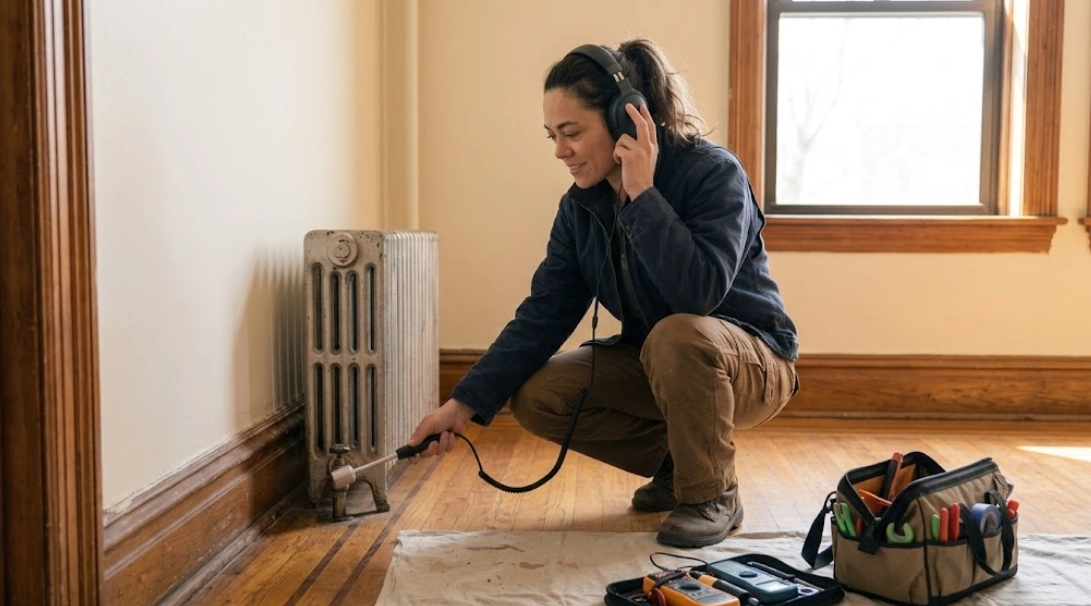
- Non-Invasive Diagnostic Tools: Depending on the building and suspected source, we may employ moisture meters to trace the dampest areas, thermal imaging cameras to spot temperature anomalies behind drywall, and acoustic listening equipment to hear the high-frequency hiss of a pressurized leak.
- Targeted Access: Once the most likely source is identified, we make a small, precise opening to confirm the failure visually.
- Repair Assessment: We determine if a localized pipe leak repair is sufficient or if the severity of the corrosion warrants broader repiping.
What Affects the Scope of a Leak Investigation?
The scope of a leak detection near Hunters Point or Court Square varies heavily based on building access and materials. A simple under-sink leak can be diagnosed in minutes. Conversely, a slow, intermittent leak originating from a concealed cast-iron drain stack buried behind three layers of tile and concrete requires significantly more investigative time.
If you need leak detection near Sunnyside or Queensbridge, the cooperation of adjacent tenants is often the biggest variable. If we suspect a leak is originating from the unit above yours, we must gain access to that apartment to inspect their fixtures and supply lines. Building management involvement is frequently necessary when shared systems are suspected to be the culprit.
Local Queens Neighborhood Context
Long Island City and its surrounding neighborhoods present a unique plumbing landscape. From the rapidly developed residential towers in Hunters Point and Gantry Plaza State Park to the older, classic brick homes in Sunnyside Gardens and Ravenswood, we adapt our diagnostic approach to the architecture. Modern high-rises often feature complex pressure-reducing valves and hidden manifolds, whereas historic properties often suffer from decades-old galvanized piping that has corroded from the inside out.
Providing expert leak detection near Queensbridge and the greater Long Island City area requires knowing how these varied systems fail. We bring local expertise and practical solutions to every service call.
Our Comprehensive Plumbing Services
Pipe Leak Repair
Once a leak is pinpointed, we provide precise repairs for pinhole leaks, burst pipes, and corroded joints. We focus on fixing the failure securely to prevent further water damage to your property.
Repiping
When localized repairs are no longer viable due to severe, systemic corrosion, we replace old, deteriorating galvanized or cast-iron lines with modern, durable materials for reliable water flow.
Water Heater Repair
If your shower suddenly runs cold or water is pooling near the tank, we diagnose and repair gas and electric water heaters, fixing faulty pilots, thermostats, and leaking valves.
Boiler Repair
We troubleshoot and repair residential steam and hot-water heating systems. From replacing failing circulator pumps to addressing loud, banging pipes, we restore your home's warmth safely.
Gas Line Repair & Inspection
Gas piping requires absolute precision. We handle appliance connections, pressure testing, and critical repairs for compromised lines to ensure total safety and compliance.
Drain Cleaning
We clear stubborn blockages in sinks, tubs, and main sewer lines using professional snaking and hydro jetting techniques, restoring proper wastewater drainage to your home.
Backflow Testing
Protect your drinking water supply from cross-contamination. We provide annual backflow prevention assembly testing, repairs, and compliance filing for local properties.
Frequently Asked Questions
Will you have to break my walls to find the leak?
Not always immediately. We use moisture meters and visual inspections to narrow down the source first. However, we cannot guarantee that every leak can be located without opening walls; eventually, we must access the pipe to repair it.
My ceiling is leaking, but the neighbor above says their floor is dry. How is this possible?
Water travels horizontally along joists, concrete slabs, and pipes before finding a place to drip down. The leak could be originating from a shower pan, a concealed drain, or a supply pipe located several feet away from the actual ceiling stain.
Should I call you or my building superintendent first?
If you live in a multi-unit building, you should notify your superintendent or property manager immediately, as the leak may involve a shared building riser or require access to another tenant's unit to resolve.
Can a leak detection tool see through concrete?
Tools like thermal imaging can detect temperature anomalies (like hot water leaking beneath a cold slab), and acoustic equipment can hear pressurized leaks, but they do not provide an X-ray vision image. They are diagnostic aids that guide our investigation.